Saturday, 14 May 2016

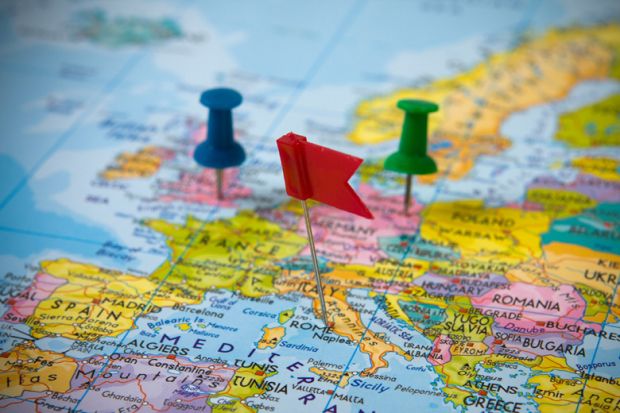
Best universities in Europe 2016 Times Higher Education World University Rankings data reveal the top 200 universities in Europe

The UK has topped a ranking of the 200 best universities in Europe, taking nearly a quarter .Map of Europe/Best universities in Europe 2016

English universities to team up with councils to boost regions Hefce-funded project aims to drive economic growth and increase employment

Civic engagementUniversity heads have teamed up with local councils on a project aimed at driving growth, redesigning public services and strengthening ties between local communities and higher education institutions.
The Leading Places Project, funded by the Higher Education Funding Council for England (Hefce), will be rolled out in numerous regions across the country later this month. The first tranche of pilots will be carried out in Gloucestershire, Manchester, Newcastle and Gateshead, Brighton and West Sussex, Bristol and Coventry/Warwickshire.
Under the scheme, vice-chancellors and council chief executives will meet to discuss local priorities with guidance from the Leadership Foundation for Higher Education. It is hoped the project will boost job prospects through university researchers identifying skills gaps, and new workers receiving training to fill them. Hefce and Universities UK will work with the Local Government Association (LGA) to help the pilots and evaluate their performance.
Madeleine Atkins, Hefce’s chief executive, said universities had a “key role to play as place makers” within local communities.
“They bring a wide range of expertise and research capability to apply to the challenges facing local government and their partners,” she said. “The Cities and Devolution Act opens up new forms of investment funding, and new opportunities to tackle the issues which affect people’s lives. Strong collaborative leadership will be more important than ever in driving these agendas.”
Research from the Leadership Foundation has highlighted the potential for universities to benefit their local communities, with numerous councils now looking to engage with them more actively.
“Cooperation with universities will give councils access to greater expertise and research opportunities,” said Mark Hawthorne, chairman of the LGA’s People and Places Board and leader of Gloucestershire County Council. “This is about applying local knowledge to solve problems as well as putting universities at the heart of creating local growth opportunities, innovation and skills.”
Nicola Dandridge, Universities UK chief executive, said the “deep roots” universities already had in their local area meant the project was an ideal opportunity to be “even more ambitious” about what can be achieved to benefit local people.

Are older academics past their productive peak? A recent paper claims that the quality of researchers declines with age. Five senior scientists consider the data and how they’ve contributed through the years

Elderly woman looking up at sky

Each year, three diseases kill 5.4 million people worldwide

As epidemics ravage the third world, Fabià Gumbau-Brisa reports on the issues facing this week's G8 summit.
Each year, just three diseases kill 5.4 million people worldwide. Malaria kills at least 1 million, mainly in developing countries, with 90 per cent of deaths in Africa. Tuberculosis causes 1.9 million deaths a year, almost all of them in developing countries, where resistance to the five major anti-tubercular drugs is spreading. Some 400,000 of the tuberculosis victims are also HIV positive. The yearly death toll for HIV/Aids is almost 2.5 million, with about 1.8 million concentrated in sub-Saharan Africa. <?xml:namespace prefix="o" ns="urn:schemas-microsoft-com:office:office"??>
Worldwide, 33 million people are currently infected with HIV/Aids: 30 million of them live in developing countries, 22 million in Africa. About 70 per cent of the almost 6 million annual infections occur in sub-Saharan Africa.
At last year's G8 Summit in Okinawa, the world's most influential states decided to confront the situation by setting some ambitious targets. By 2010, they committed to reducing the number of HIV-infected people by 25 per cent, cutting the number of tuberculosis deaths and cases by 50 per cent and reducing the burden of malaria-related disease by 50 per cent. This year's summit in Genoa (July 20-22) will give the G8 members an opportunity to review progress in what is clearly a daunting task.
But these epidemics are not restricted to the developing world. The evolution of tuberculosis cases in the United States since the 1980s shows that the spread of diseases in developing countries poses a significant health threat to richer countries. Some 22 per cent of US tuberculosis patients in 1986 and 39 per cent in 1997 were foreign-born. It is also conceivable that these epidemics could become a cause of unrest, damaging rich countries' economic and political interests. This could help to explain rich countries' willingness to address the issues.
Several governments and institutions, including the Gates Foundation, the Rockefeller Foundation, UNAids, the Global Alliance for Vaccines and Immunisation, and the International Aids Vaccine Initiative, are already taking action. Moreover, the US Congress is considering the introduction of substantial tax credits on sales of approved vaccines for infectious diseases responsible for more than 1 million annual deaths.
Britain's chancellor of the exchequer Gordon Brown remarked in February on the need for additional efforts to fight the spread of HIV/Aids, malaria and tuberculosis, outlining a series of policies designed to achieve that goal. A recent report by the Performance and Innovation Unit of the Cabinet Office makes the economic argument for taking action.
Based on a cost-effectiveness analysis, Tackling the Diseases of Poverty, clearly shows that, if the Okinawa targets are to be achieved, we need better products, such as vaccines that are targeted specifically at the needs of the poor. The report recommends the creation of a Global Health Fund divided into two sub-funds. The first would purchase existing health products such as drugs, condoms and bed nets. The second would be solely aimed at purchasing new products designed for poor countries - it is not clear, for example, that a vaccine against HIV strains common in the US and Europe would work against the most common African strain.
There is little financial incentive for drugs companies to generate products for developing countries, hence the scarcity of drugs to treat their diseases. The most efficient way to provide incentives would be to reward innovation directly. The fund would guarantee sufficient sales of new products, along the lines of the purchase pre-commitment plan outlined by Harvard University's Michael Kremer, thereby increasing the incentives for research into diseases of the poor.
The reason poor countries do not represent a sufficient market for pharmaceuticals companies is not only because they cannot afford to pay much for drugs or vaccines. They also lack adequate nutrition, education and infrastructures. If these were the only reasons, it would be difficult (and cynical) to privilege markets for pharmaceuticals over markets for these other factors. But there are other reasons that have been used to justify market intervention in the case of vaccines. First, people's willingness to pay for immunisation does not fully reflect its benefits to society. Immunisation does not just protect those being vaccinated, but also untold others who might come into contact with them.
Second, it is easier for people to assess the gains from treating a disease than from preventing it. Probability can be used to estimate the gains from immunisation, but, while the world's poor are not versed in this language, their willingness to pay for prevention will not fully take into account its benefits.
Governments, international institutions and non-governmental organisations to some extent lessen the scale of these problems through their role as major purchasers of health products for the poor. But there are other hurdles. First, fighting worldwide epidemics is a global public good. Finding a vaccine for HIV/Aids might save many lives in the UK, but would also benefit other countries. This means that there are few incentives for governments to take unilateral action. Second, innovation involves huge research and development costs. There needs to be the prospect of a reward.
The system of patents, trademarks and similar arrangements helps to protect innovators, providing a degree of market exclusivity so that they can recoup these costs. But institutional purchasers, the potential buyers of new health products for poor countries, have for a long time been trying to push down prices. As a result, innovators fear they will lose money if they invest in new products for the poor. According to some, public research could be the solution, but this has a chequered history, USAid's malaria vaccine programme in the 1980s being but one embarrassing example.
Finally, socio-political constraints on charging different prices in different markets might also have a negative effect on research incentives. Recent experience with drugs for treating HIV/Aids provides an excellent example. The price reductions for antiretroviral drugs obtained by several African countries have served to fuel attacks on Aids drugs prices in rich countries, especially the US.
This criticism might have increased the risk factors associated with investment in new products to fight HIV/Aids, eroding further incentives for new research. But Aids affects developing countries disproportionately, although rich countries' interest groups appear not to recognise this in their drive for "equal" treatment, a battle that they can at best win only on a temporary basis - since the economics of permanently reducing prices across the globe do not add up.
A purchase pre-commitment for future products would partially get around those problems by committing to purchase a predetermined number of units of a new health product at a preannounced price, for later distribution in developing countries. The price would depend on the product's proven effectiveness in tests in these countries.
Nevertheless, events such as the apparent collapse of the Kyoto protocol cast doubt on the feasibility of international coordinated action for the global good. The Kyoto case has lessons for any future international agreements to promote global health: either the international community enters into a binding commitment to reward and promote research into the diseases of poor countries, or the Okinawa targets will not be met. The only hope seems to be the creation of better products to combat communicable diseases. That is dependent on the commitments at the Genoa summit being binding.
We should not forget that, in addition to resources, innovation needs time. The shorter the period we have for finding new products, the higher the costs. The estimate for the cost to rich countries of reaching the Okinawa targets is more than £20 billion.
If the Genoa summit closes without any clear commitment on this front or if the anti-globalisation protesters distract from the meat of the debate and allow states off the hook, the world might have to wait another year. This will have a knock-on effect on the research bill. And, after such a costly wait, might there not then be pressure to abandon the targets altogether?
Fabià Gumbau-Brisa is a PhD candidate in the department of economics atHarvard University.

south africa wine estate

Apple and raisin oat crumble they used to treat diseses and keep your healyh good Method Peel and core the apples, and cut into chunks. Melt the butter in a medium sized pot, then add the apple chunks. Toss to coat in the butter, then cook for 10 minutes, stirring occasionally. Add the raisins, caramel sugar, cinnamon and nutmeg and stir well. Cook for a further 10-12 minutes, stirring regularly, until the apple chunks are soft but still have some bite. Remove from the heat and set aside. Preheat your oven to 190°C. Prepare the crumble topping. Place the flour, caramel sugar, oats and butter together in a bowl. Use your fingertips to rub the ingredients together. The mixture will be dry at first, but continue to rub until the butter coats the dry ingredients and the mixture starts to clump together. Divide the cooked apple between 6 small ramekins. Do the same with the crumble mixture, sprinkling on top of the apple. Place the ramekins on a tray and bake for 25-30 minutes until the crumble starts to colour. While the crumbles bake you can prepare your custard. Whisk the egg yolks and castor sugar together until creamy. Whisk in the flour. Place the milk in a saucepan over a medium heat and heat just until boiling point. Remove from the heat and carefully add half of the milk to the egg mixture while whisking continuously. Then add the egg-milk mixture back into the saucepan with the remaining milk and heat slowly while whisking. Continue to cook until the custard has thickened. Stir in the vanilla paste then transfer to a warm jug. Allow the cooked apple crumbles to stand for a few minutes before serving with fresh vanilla custard.

With vanilla custard, this is a heavenly combination.
recipes, dessert, fruit
Image by:
Recipe from: 04 September 2014
Preparation time: 20 min
Cooking time: 50 min

Ingredients

  • 1
    kg
    apples
  • 100
    g
    butter
  • 60
    ml
    raisins
  • 60
    ml
    caramel sugar
  • 1
    cinnamon
  • 1/4
    tsp
    nutmeg
  • CRUMBLE TOPPING:
  • 90
    g
    flour
  • 60
    g
    caramel sugar

  • 30
    g
    oats
  • 75
    g
    butter, at room temperature
  • VANILLA CUSTARD:
  • 2
    egg yolks
  • 40
    g
    caster sugar
  • 2
    Tbs
    flour
  • 300
    ml
    milk
  • 1/2
    tsp
    vanilla paste

Chocolate and blueberry nice cream,This is one healthy party in a jar.

recipe, chocolate, blueberry, summer,treat

what’s the best thing to ease the trauma of having to wake up in the morning?

Uganda opposition leader charged with treason - lawyer Kampala - Ugandan opposition leader Kizza Besigye was charged with treason on Friday at a court in the north-eastern Karamoja region where he was taken after his latest arrest, his lawyers said. Besigye has disputed President Yoweri Museveni's victory in February's election and has been under house arrest for much of the time since. He was arrested in the capital Kampala on Wednesday after staging his own swearing-in ceremony and whisked to Moroto, a town in the remote Karamoja region of the country. "We have been informed by police today that Besigye appeared in court in Moroto and was charged with treason," lawyer Erias Lukwago told AFP. Lukwago said his client was denied legal representation when charged with treason, and was remanded in custody until his next court appearance due on 25 May. "It's absurd because none of us was there to represent him," he said. Treason is a capital offence in Uganda, but the death penalty has not been carried out for years. Besigye was previously charged with treason in 2005, but the case against him was eventually dropped Police spokesperson Fred Enanga confirmed the latest case against Besigye, but was unable to provide any further details of the charges. A long-standing opponent of Museveni, Besigye has been frequently jailed, placed under house arrest, accused of both treason and rape, tear-gassed, beaten and hospitalised over the years. Museveni, 71, who has been in power for three decades, was declared winner of the February poll with 61% of the vote. He has rejected claims his victory was won through cheating and fraud. Museveni was sworn in for a fifth term in office on Thursday at an event attended by foreign heads of state and diplomats. He used the occasion to criticise the International Criminal Court (ICC) sparking a walk-out by diplomats from the US and European Union.

Kizza Besigye (Picture: AFP)

China’s Tencent launches its own Android-based operating system, TOS+

TOS+

Detroit motor show surprise: Holden designs Buick luxury car for China and the world

Buick may have a stale image overseas but it is enjoying a resurgence in the US.Check this out ... former Holden boss Mark Reuss explains designers are working on the ChThe Buick Avenir underlines Australia’s transformation into a design and engineering hub,In demand ... 1.2 million Buicks sold globally last year.

Detroit motor show surprise: Holden designs Buick luxury car for China and the worldA brand-new Buick concept car was unveiled at a preview event on the eve of North America’s largest auto show on Sunday evening in the US, about 11am Monday Australian Eastern Standard Time.

Lap of luxury ... the interior and the exterior was a joint design effort between Austral

Viv, Siri Creator’s New AI Platform, Can Almost Think for Itselfag Kittlaus wants you to imagine buying a consumer electronic device in the near future. You take it out the box, plug it into the wall, unlock it with a biometric thumbprint, and then the device comes to life. “Hi, nice to meet you,” it says, before walking you through its setup via natural conversation. That scenario isn’t too far away, according to Kittlaus, who used today’s TechCrunch Disrupt in Brooklyn as part of a coming-out-party for Viv, a new voice-activated digital assistant. After three round of venture capital (VC) funding and more than a year in development, Viv is ready for primetime. Viv is an artificial intelligence (AI) platform that gives developers and hardware makers the ability to imbue any product or interface with a conversational user interface (UI). It’s AI that talks to you, but not in quite the same way as the machine-learning bots we’re beginning to see in chat interfaces from Facebook,Microsoft, and others. It’s less about intuitively surfacing relevant search results or product suggestions, and more about actually having a conversation with an app or device where the device is essentially thinking for itself. What went unsaid at Disrupt is that Viv is positioning itself as the next evolution of personal assistants like Cortana, Google Now, and yes, Siri. Kittlaus knows a thing or two about that; he’s the co-founder and former CEO of Siri, which Apple acquired for more than $200 million in 2010. The biggest benefit of the AI explosion is convenience for everyday users, he says. “AI will make mundane tasks easier to do, and approach user experience in a more personalized way. When you ask your app or device for something, you won’t have to explain every bit of detail each time. It starts to know you,” said Kittlaus. “Conversations are a natural way to interact with humans, and conversational UIs are just a more natural way to interact with your technology.” Viv Writes Its Own Code Kittlaus said the start-up will partner with manufacturers to get Viv up and running in embedded devices, along with giving developers the ability to integrate Viv into their mobile app or software through Viv-as-a-Platform. He gave the first-ever Viv demo (below), asking Viv in different variations of natural language about the weather in several locations on various days, booking a hotel room, paying a friend back through Venmo, and sending flower arrangements for Mother’s Day.

artificial-intelligence